homemade yogurt
½ gal milk

4 tbsp plain greek yogurt
Checkout experience
Heat the milk in a thick-bottomed saucepan over medium-high heat to 185F [85C] when measured by an instant-read digital thermometer, and maintain at this temperature for 3 minutes.
Remove the milk from the stove, cover it with a lid, and let it sit outside on the kitchen counter till it cools to 110F/43C, when measured by an instant-read digital thermometer. The cooling time will depend on the ambient room temperature.
Once the milk is cooled to 110F/43C when measured by an instant-read digital thermometer, whisk in the yogurt (the milk is now inoculated with the bacteria). Transfer the inoculated milk to a clean, sterile glass or plastic storage container with a lid. You can divide the inoculated milk into smaller containers. Partially seal the container (s) with its lid, to allow a little air to enter.
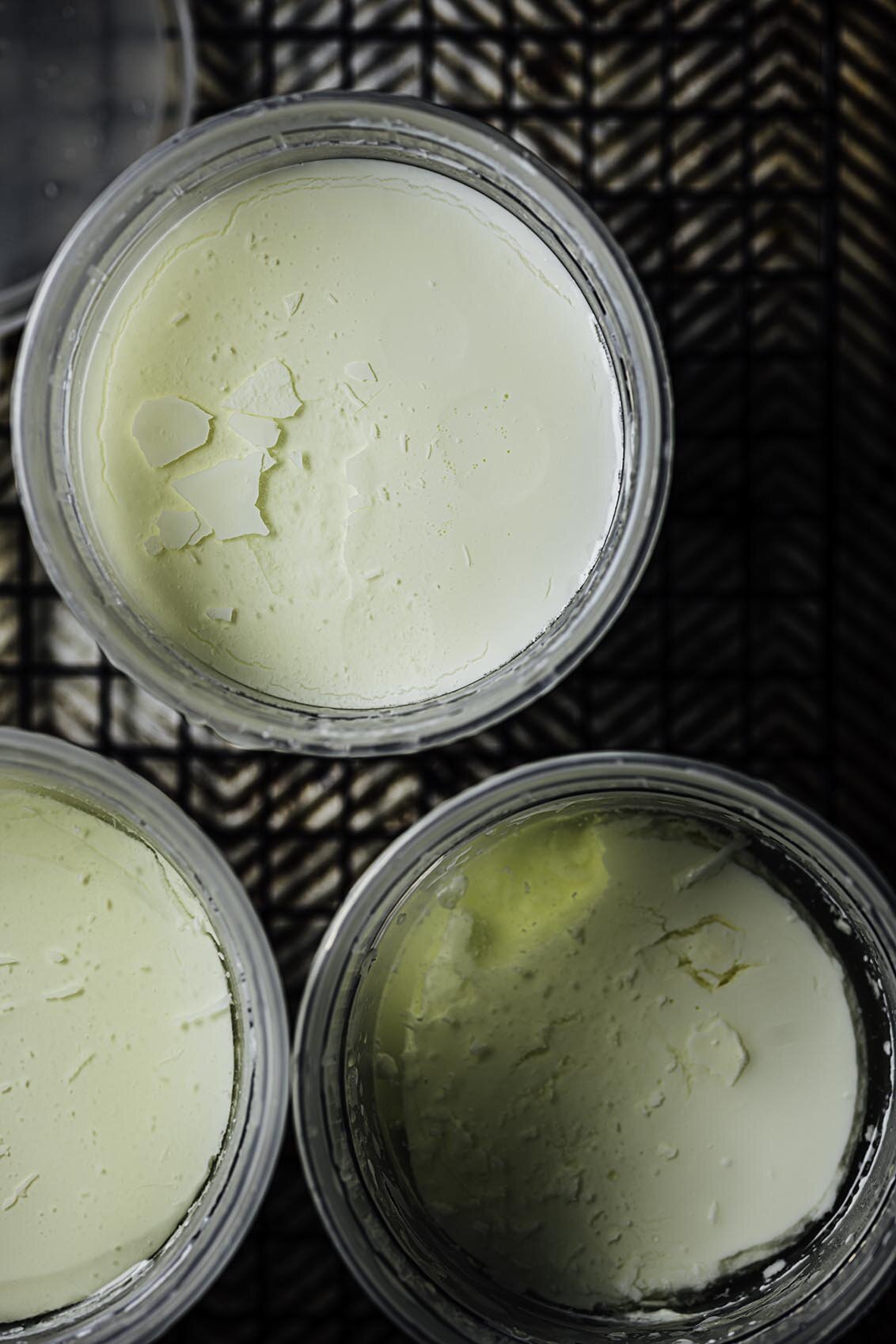
Place the container (s) with the inoculated milk into a large deep pot and fill it with enough water up to the height of the milk in the container to ensure it is exposed to the water. Set the cooking conditions on the sous vide device to 110F/43C for 14 hours. Cover the top of the pot with a lid or plastic wrap to reduce the risk of water loss through evaporation. During this time, avoid shaking the yogurt to see if the milk proteins have changed; shaking during fermentation will affect the texture of the yogurt. Once the time is complete, remove the containers from the water bath. The translucent greenish whey liquid will separate from the solid milk proteins; the latter will look like a soft white cake. Seal the container(s) tightly with a lid and refrigerate for up to 2 weeks. (NOTE: If you don’t own a sous vide device, read the headnotes for
View original recipe