homemade egg pasta dough
Checkout experience
Place the flour in the shape of a mound on a clean and dry surface. Using your hand, make a deep well in the center of the flour and sprinkle the salt in the well.
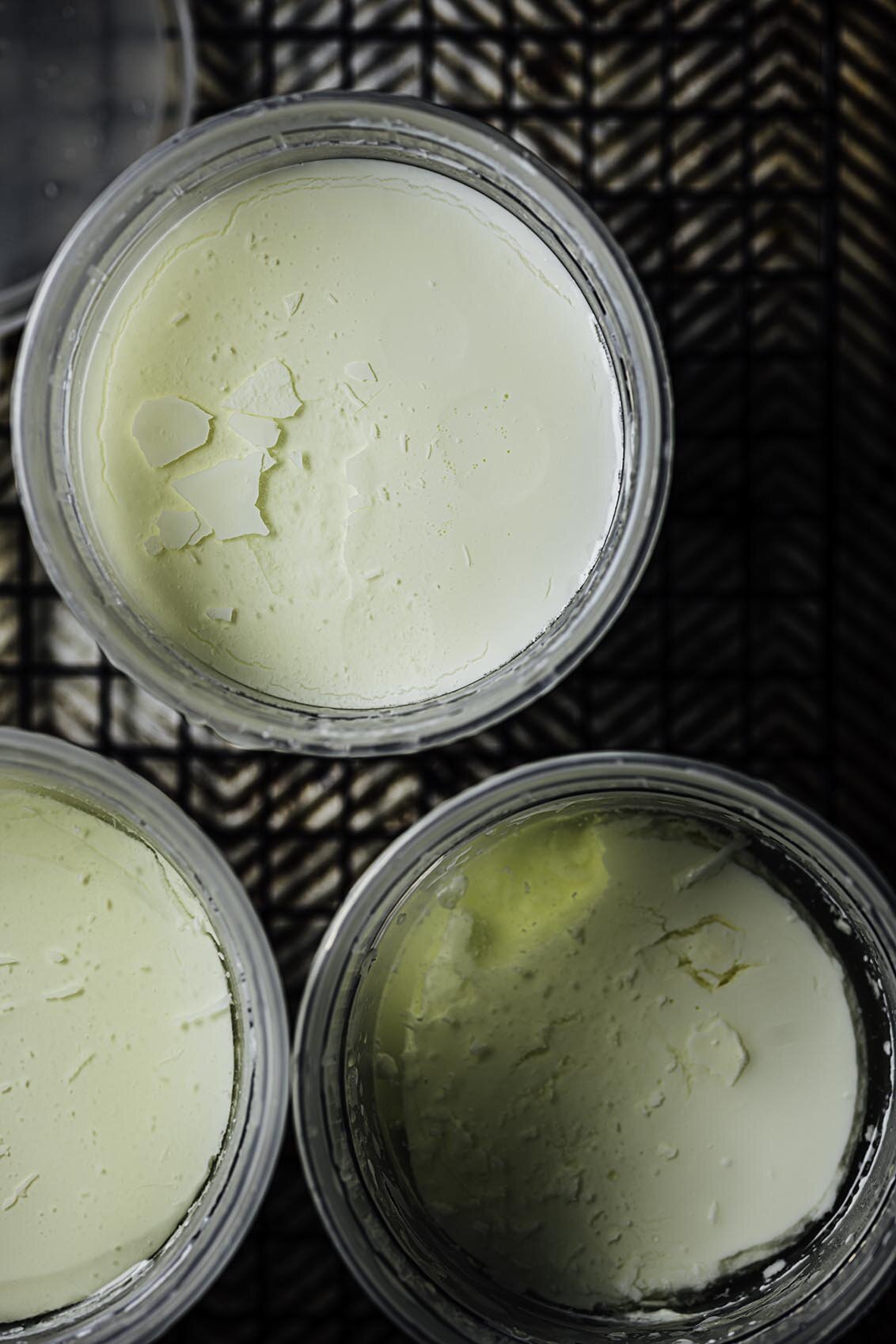
Carefully pour the egg yolks and olive oil into the well, and then, using a fork, gently mix the egg yolks by stirring and scraping from the bottom to the work surface as you proceed. Avoid touching the “walls” of the flour during this stage.
Once the yolks are mixed, start to slowly incorporate the walls of the flour, gradually working your way outwards and thereby incorporating more and more flour as you proceed. If the yolk mixture spills out of the walls, push them back and reform the “walls” using your hands.
Once the mixture starts to acquire a more solid texture, remove any material that is attached to the fork. Then, using a bench scraper, release the wet dough that is attached to the work surface and, using your hands, start to bring the dough together to form a single mass. While working the dough, mist the dough liberally with water to moisten it and bring it together. The dough will dry at first, and as you spritz with water, it will start to get wet, and eventually, all the flour will be incorporated into the dough ball.
Knead the dry dough by hand for 10 to 15 minutes. It will transition into a smooth, pliable, and flexible dough with a bright, shiny yellow texture. Wrap the dough in cling film and allow it to rest for at least 30 minutes at room temperature before use. Do not store for more than 2 days as the yolks will oxidize with time (see notes above).
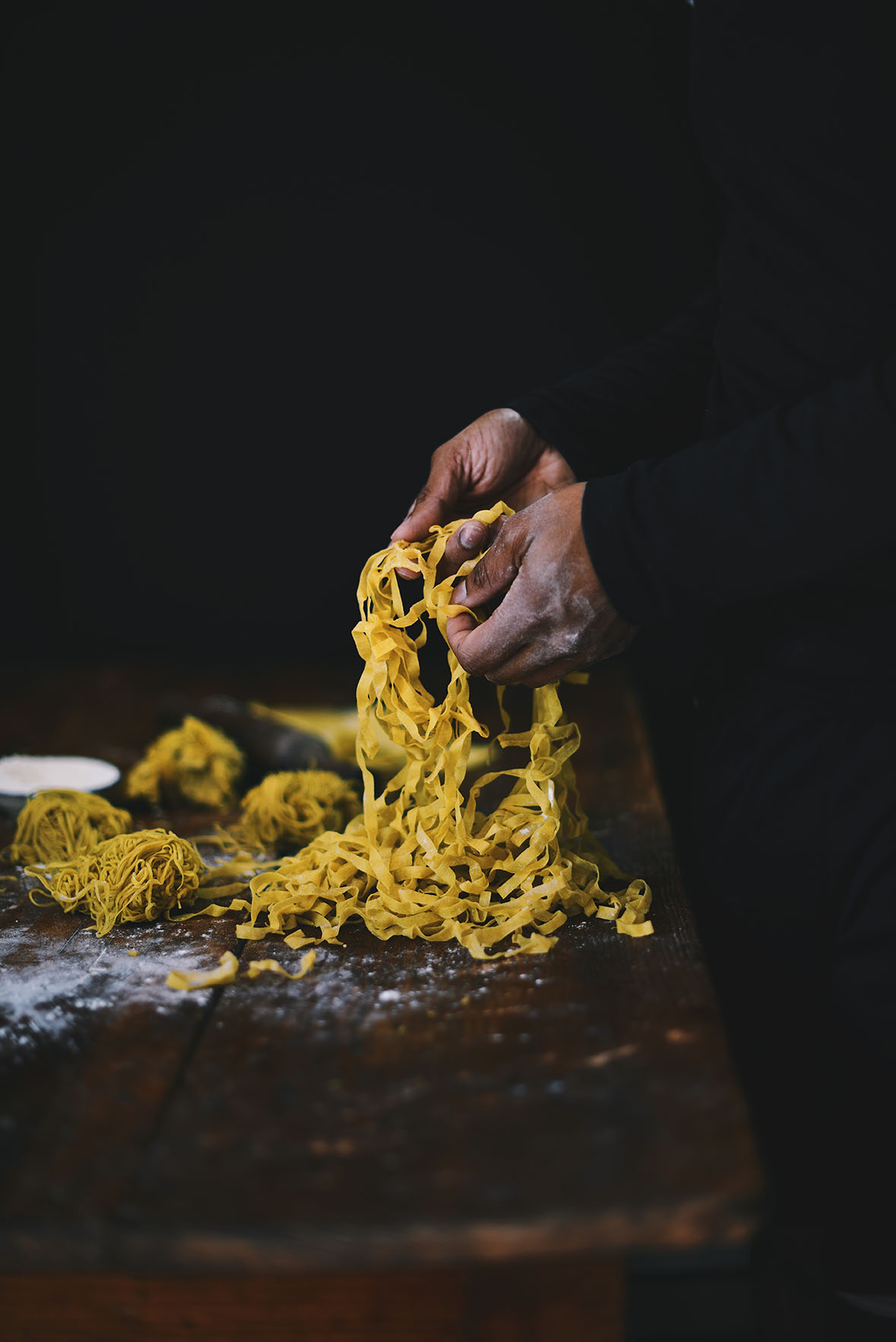
To roll out the dough, unwrap the dough and divide it into 4 equal parts. You can use the manufacturer’s instructions on your machine or form one part into a ball. Place it on a clean, very lightly floured surface and roll out the dough to a thickness that will just fit into the widest setting of your pasta machine. As the dough is dry, it is unnecessary to add any extra flour while rolling it into the machine. Start with the widest setting on the flat rollers and pass the dough through the machine 3 times. It will double in length. Then, decrease the width of the flat rollers and repeat the same process. The ideal width of the pasta sheet should allow you to have a finger’s length space on each side, so there is plenty of room in the machine. Keep the speed consistent when you roll out the dough. As the dough gets thinner, it will dry faster and will get stiffer easily. So cut it immediately as soon as it forms and use it to cook.
View original recipe